Apple at 50: Tech Giant Reflects on Its Legacy While Facing a New Era
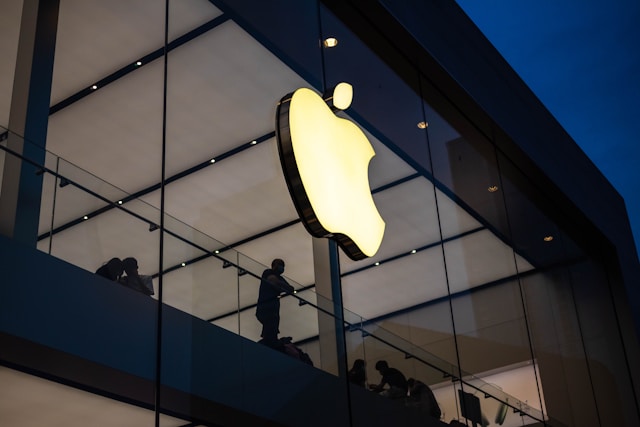
As Apple Inc. approaches its 50th anniversary on April 1, the company stands at one of the most defining moments in its history. What began in 1976 as a bold technology venture founded by Steve Jobs, Steve Wozniak, and Ronald Wayne has evolved into one of the world’s most influential technology companies, shaping how billions of people communicate, work, and experience digital life.
At this milestone, the anniversary is not only a celebration of past achievements but also a moment of strategic reflection for the company’s future under Tim Cook.
Read more about Apple’s 50 years of thinking differently
A Legacy Built on Simplicity and Innovation
In a recent anniversary message, Tim Cook revisited the values that have long defined the company, emphasizing the philosophy behind Apple’s famous “Think Different” mindset.
That philosophy helped turn products such as the iPhone, MacBook Air, Apple Watch, and AirPods into global standards.
Apple’s strength has always gone beyond hardware. Its reputation was built on product simplicity, careful design decisions, and a commitment to making technology feel personal and intuitive.
Many analysts note that what once seemed uncertain after the passing of Steve Jobs has instead become one of the most stable growth eras in corporate history under Cook’s leadership.
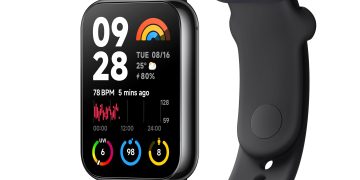
Learn about the best smartwatches in 2026
The Challenge of Moving Beyond the iPhone
Despite its broad product portfolio, Apple remains heavily dependent on the iPhone. Industry estimates suggest that roughly half of Apple’s annual revenue, which exceeds $400 billion, still comes from the iPhone alone. This level of dependence creates both strength and pressure.
The smartphone remains Apple’s strongest economic engine, but technology analysts increasingly believe that the next major interface for human interaction may move beyond phones entirely.
Emerging technologies point toward a future shaped by wearable computing, including smart glasses, advanced earbuds, rings, and ambient devices that blend more naturally into daily life.
For Apple, the major question is whether it can successfully disrupt its own most successful product before competitors define the next era.
Artificial Intelligence Brings New Competitive Pressure
Apple’s traditional strategy has often relied on entering categories later than competitors, then improving them significantly. That approach worked in personal computers, smartphones, wireless audio, and smartwatches.
However, the rapid rise of artificial intelligence has introduced a faster innovation cycle. Apple’s AI platform, known as Apple Intelligence, entered a market where competitors had already begun shaping user habits and expectations.
Meanwhile, companies such as Meta Platforms continue to build momentum in wearable AI products, particularly smart glasses. This creates a new challenge for Apple: being better may no longer be enough if competitors establish user behavior first.
Services Become Central to Apple’s Future
One of the most significant shifts inside Apple over the past decade has been the rise of services. Platforms such as Apple Music, Apple TV, Apple Arcade, and Apple News+ now form a major part of the company’s revenue structure.
The App Store also remains one of the company’s strongest profit centers.
These services generate higher margins than hardware and help shift Apple from one-time device sales toward recurring customer relationships. This means Apple increasingly earns from ecosystem loyalty rather than product replacement cycles alone.
Affordable Premium Devices Mark a New Direction
Another major shift becoming visible during Apple’s 50th year is pricing strategy.
For years, Apple carried what many consumers called the “Apple Tax,” referring to premium pricing attached to premium quality.
Yet recent product launches suggest Apple is finding new ways to balance affordability with design standards. The newer iPhone 17 Pro reportedly keeps the same pricing level as its predecessor while offering larger storage and added features such as MagSafe.
Similarly, the latest MacBook Air models now offer higher storage capacity at price points many consumers consider more competitive. The biggest attention, however, has gone to the MacBook Neo.
Positioned as an affordable entry-level laptop, it reflects Apple’s effort to create a premium-feeling product at a much lower price than traditional Mac devices.
For many observers, this move echoes Apple’s earliest vision of making powerful computing accessible to more people.
Looking Ahead
Apple enters its next decade not as a company trying to prove relevance, but as one trying to redefine leadership again. The next breakthrough may not look like the products that built its reputation. Yet Apple’s history shows that its greatest strength often appears when technology becomes simple enough for everyday life.
At 50, Apple remains one of the most watched companies in the world, not because of what it has already built, but because of what it may still invent next



Leave a reply


 Fun times ahead … #lebronjames #lakers #lebron #lustremagazine00:19
 Oscar-winning #MichaelBJordan Congratulations!! #Sinners for winning Best Actor at the 2026 #Oscars00:56
 #Zendaya publicly shared “recovery plan” and its brilliantly low-effort #lustremagazine00:16
 #NickJonas is smooth 😍 #PriyankaChopra #couple00:10
 #AnnaWintour and #MirandaPriestly at the 2026 #Oscars00:14
 #tchalamet and @kyliejenner make their way into the #VFOscars party. Video by wengellg00:06
 #Oscar winner and #Sinners star #MichaelBJordan00:38
 #ElsaPataky #ChrisHemsworth #Oscars #celebritycouple #Oscars202600:08
 #tyla attends the #maisonvalentino AW26 show in Rome #DazedFashionTV #Valentino00:12
 Garmmy 2026 #justinbieber #hailybieber #grammy #lilbieber #lustremagazine00:29
 #zendaya understood the assignment. #tomholland #viral #trend #celebrity00:11
 #LeonardoDiCaprio has graced the #BAFTAs with a rare red-carpet appearance, wearing a #dior00:21
 #annehathaway at the #Balenciaga fashion show 2026 #ParisFashion Week on #thedevilwearsprada00:14
 #Ponytail is back! #ArianaGrande looks gorgeous at the 2026 🎥: ginainterrupted #GoldenGlobes.00:20
 #SHAQ forgot that he bought two Escalades 😅01:14
 #therock and #KevinHart doing the #TortillaChallenge is the funniest thing we’ve seen all week!01:00
 #Oscar Throwbacks, #EmmaStone accepting her second Academy Award (in a broken dress!)01:41
 #Bridgerton cast and crew singing ‘Happy Birthday’ for #Yerin #bridgertonseason400:16
 Inside #queencharlotte wig #bridgerton #bridgertonseason400:08
 #zendaya at the #louisvuitton AW26 #lustremagazine00:17
 #shaq on set for #gravesendseries #shaq #brooklyn #onset #basketball #gangster #epic00:13
 #zendaya dazzling in white at #louisvuitton’s fall/winter #ParisFashionWeek show #lustremagazine00:17
 #shaq #queenlatifah at a NBA playoffs game #shaquilleoneal #nbaplayoffs00:16
 #johnlithgow #albusdumbledore #harrypotter #celebrity00:12
 #sbiff awardees #jacobelordi #wagnermoura #teyanataylor #wunmimosaku #ingalilleaas #sydneysweeney00:07