
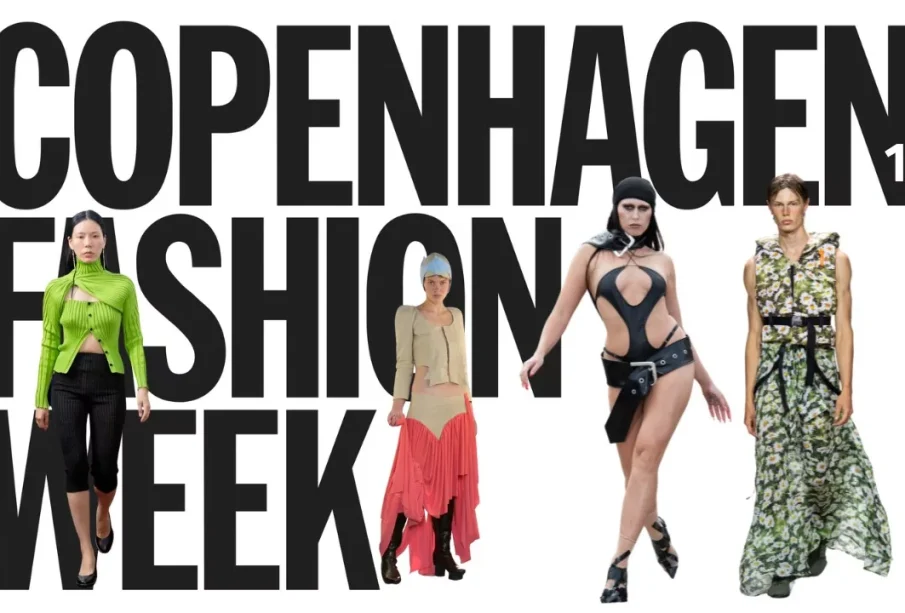
Copenhagen Fashion Week continues to lead on sustainability, proving responsible fashion can thrive amid industry-wide pullbacks.
As the fashion world wrestles with wavering commitment to eco-initiatives and tightening budgets for green programs, Copenhagen Fashion Week (CPHFW) stands out as a resilient force, maintaining sustainability not as an accessory but as a core principle of its identity. The 20th anniversary of the biannual event widely seen today as the “fifth fashion week” alongside New York, London, Milan and Paris reaffirmed that commitment amid a shifting global fashion landscape.
Here’s a comprehensive look at how CPHFW continues to defy the sustainability pullback and what that means for the industry, emerging creatives, and fashion’s future.
Sustainability at Its Core: History & Framework
From the beginning, Copenhagen distinguished itself from other fashion capitals by embedding environmental and ethical responsibility into its fabric. More than just a trade showcase, it’s built around a robust Sustainability Requirements Framework that sets minimum standards for participating brands.
-
Early leadership: In 2020 CPHFW launched an ambitious sustainability strategy that would become mandatory for designers by 2023, moving beyond voluntary pledges to enforceable criteria.
-
Minimum standards: These include responsible material sourcing, circular design, labor and supply-chain due diligence, and reductions in waste and carbon footprint integrating sustainability across design, production and presentation.
-
Global influence: The framework isn’t just local. Other major fashion weeks including Berlin, Amsterdam, and now the British Fashion Council’s NEWGEN initiative have adopted or aligned with CPHFW’s sustainability criteria, amplifying its impact beyond Scandinavia.
This is significant especially at a moment when big fashion houses elsewhere are retreating from ambitious sustainability programs in favor of short-term commercial priorities.
A Championship for Purposeful Fashion
Where others are scaling back, Copenhagen has walked the talk:
Rigorous Entry Requirements
Under its minimum standards policy, brands must demonstrate substantiated sustainability work across material use, labor practices, supply chain transparency, and lifecycle thinking. While not without debate, this requirement means the week isn’t just a runway it’s a platform that demands accountability.
Industry Partnerships & Diffusion
CPHFW’s sustainability ethos is now influencing other key institutions:
-
British Fashion Council (BFC): Adopting CPHFW’s sustainability requirements into NEWGEN, a leading incubator for young designers.
-
Amsterdam & Berlin Fashion Weeks: Embedding the same baseline standards in their calendars, signalling a coalescing shift in responsible fashion infrastructure.
Such collaborations help ensure sustainability isn’t siloed in Scandinavia but increasingly part of fashion’s standard operating model.
Beyond Greenwashing – Real Progress & Debate
Skeptics have raised valid concerns: accusations of “greenwashing,” ambiguous claims about brand sustainability, and questions over enforcement have cropped up. Some argue that without rigid, independent auditing and consequences for non-compliance, sustainability frameworks risk becoming symbolic.
Yet these critiques also reflect industry-wide growing pains and Copenhagen’s response has been to lean further into clarity, transparency, and structural evolution rather than retreat. The broader industry trend may be one of questioning and refining sustainability norms and CPHFW is part of that conversation rather than outside it.
A Runway for Meaningful Culture & Talent
Even with eco-leadership at its heart, Copenhagen hasn’t lost its creative edge. Recent editions have celebrated:
-
Intimate, community-focused showcases that elevate emerging labels with thoughtful design and sustainable production.
-
Collaborations between heritage artisans and tech innovators such as integration of digital product passports and NFC chips for traceability.
-
Ongoing support for rising talent through awards and institutional backing that marry creativity with responsible practice.
This balance demonstrates that sustainability and artistry aren’t at odds they are complementary drivers of contemporary fashion.
Looking Forward: Sustainability Isn’t Going Anywhere
In a global industry where sustainability can feel cyclical waxing and waning with market pressures Copenhagen Fashion Week’s commitment anchors this movement. Its multi-layered influence from policy frameworks to international partnerships, and from emerging designers to mainstream adoption suggests that sustainability isn’t a trend to pull back from but a foundation to build on.
As fashion grapples with climate urgency and cultural responsibility, Copenhagen’s model shows that rigorous standards and creative vitality can coexist and that a fashion week can be far more than a seasonal spectacle. Ultimately, its continued defiance of the sustainability pullback may be its greatest contribution yet: a blueprint for fashion that is beautiful, ethical and enduring.



Leave a reply


 Fun times ahead … #lebronjames #lakers #lebron #lustremagazine00:19
 Oscar-winning #MichaelBJordan Congratulations!! #Sinners for winning Best Actor at the 2026 #Oscars00:56
 #Zendaya publicly shared “recovery plan” and its brilliantly low-effort #lustremagazine00:16
 #NickJonas is smooth 😍 #PriyankaChopra #couple00:10
 #AnnaWintour and #MirandaPriestly at the 2026 #Oscars00:14
 #tchalamet and @kyliejenner make their way into the #VFOscars party. Video by wengellg00:06
 #Oscar winner and #Sinners star #MichaelBJordan00:38
 #ElsaPataky #ChrisHemsworth #Oscars #celebritycouple #Oscars202600:08
 #tyla attends the #maisonvalentino AW26 show in Rome #DazedFashionTV #Valentino00:12
 Garmmy 2026 #justinbieber #hailybieber #grammy #lilbieber #lustremagazine00:29
 #zendaya understood the assignment. #tomholland #viral #trend #celebrity00:11
 #LeonardoDiCaprio has graced the #BAFTAs with a rare red-carpet appearance, wearing a #dior00:21
 #annehathaway at the #Balenciaga fashion show 2026 #ParisFashion Week on #thedevilwearsprada00:14
 #Ponytail is back! #ArianaGrande looks gorgeous at the 2026 🎥: ginainterrupted #GoldenGlobes.00:20
 #SHAQ forgot that he bought two Escalades 😅01:14
 #therock and #KevinHart doing the #TortillaChallenge is the funniest thing we’ve seen all week!01:00
 #Oscar Throwbacks, #EmmaStone accepting her second Academy Award (in a broken dress!)01:41
 #Bridgerton cast and crew singing ‘Happy Birthday’ for #Yerin #bridgertonseason400:16
 Inside #queencharlotte wig #bridgerton #bridgertonseason400:08
 #zendaya at the #louisvuitton AW26 #lustremagazine00:17
 #shaq on set for #gravesendseries #shaq #brooklyn #onset #basketball #gangster #epic00:13
 #zendaya dazzling in white at #louisvuitton’s fall/winter #ParisFashionWeek show #lustremagazine00:17
 #shaq #queenlatifah at a NBA playoffs game #shaquilleoneal #nbaplayoffs00:16
 #johnlithgow #albusdumbledore #harrypotter #celebrity00:12
 #sbiff awardees #jacobelordi #wagnermoura #teyanataylor #wunmimosaku #ingalilleaas #sydneysweeney00:07