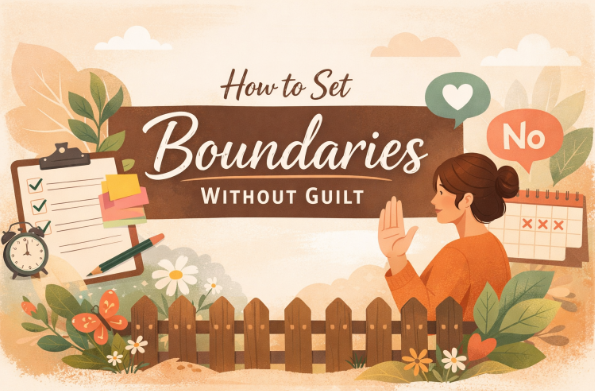
How to Set Boundaries Without Guilt
Setting boundaries is an essential part of maintaining healthy relationships and protecting your mental well-being. Yet for many people, the idea of saying “no” can feel uncomfortable or even selfish. We may worry about disappointing others, damaging relationships, or appearing unkind. However, healthy boundaries are not about pushing people away—they are about creating relationships built on respect, honesty, and balance.
Learning how to set boundaries without guilt allows you to show up authentically in your relationships while still protecting your time, energy, and emotional health. When boundaries are clear and communicated with kindness, they can actually strengthen connections rather than weaken them.
What Healthy Boundaries Really Mean
Boundaries are the limits we set to define what is acceptable and what is not in our relationships, work, and personal lives. They help communicate how we want to be treated and what we are able to offer others.
Healthy boundaries are rooted in self-respect rather than control. They allow you to express your needs and values while also acknowledging the needs of others. When boundaries are clear, relationships tend to feel more balanced and less stressful.
Without boundaries, people often find themselves overcommitting, sacrificing their own needs, or feeling resentful. You might say “yes” when you really want to say “no,” simply to avoid conflict or maintain approval. Over time, this can lead to emotional exhaustion and burnout.
By setting boundaries, you create space for more honest communication. People know what to expect from you, and you can engage in relationships without feeling pressured or overwhelmed.
Why Saying No Often Feels Difficult
For many individuals, saying “no” can trigger feelings of guilt. This happens because humans naturally value connection and acceptance. When we decline a request or assert a limit, it can feel as though we are letting someone down.
Several common patterns contribute to this difficulty:
Fear of disappointing others can make it hard to refuse requests, especially from people we care about. We may worry that the other person will feel hurt, rejected, or frustrated.
The desire to be liked also plays a role. Many people believe that being agreeable and accommodating will make them appear kind and supportive. As a result, they avoid setting limits.
Another factor is a sense of obligation. Some individuals feel responsible for solving other people’s problems or meeting their needs, even at the expense of their own well-being.
Finally, self-criticism can intensify the guilt. When someone sets a boundary, they might think, “Am I being selfish?” or “Should I just help anyway?”
It is important to remember that feeling guilty does not necessarily mean you have done something wrong. Sometimes guilt simply reflects the discomfort of changing a long-standing habit.
The Importance of Setting Boundaries
Setting boundaries is not about rejecting others—it is about protecting your well-being and maintaining healthier relationships.
One of the most important benefits of boundaries is protecting your time and energy. Every commitment you accept requires emotional and physical resources. If you say “yes” to everything, you may have little time left for your own priorities.
Boundaries also support better mental health. Constantly overextending yourself can lead to stress, anxiety, and burnout. By recognizing your limits, you create space for rest and self-care.
Clear boundaries can also improve relationships. When expectations are communicated openly, misunderstandings decrease, and mutual respect grows. People are more likely to value your time and contributions when they see that you respect them yourself.
Finally, setting boundaries strengthens self-worth. It reinforces the idea that your needs, feelings, and values matter just as much as anyone else’s.
Using Values to Guide Your Boundaries
One helpful approach to setting boundaries comes from Acceptance and Commitment Therapy (ACT). ACT encourages individuals to make decisions based on their personal values rather than reacting solely to emotions like fear or guilt.
When deciding whether to accept a request, it can be helpful to pause and ask yourself a few questions. What kind of relationship do you want to maintain in the long term? What values matter most to you, such as respect, honesty, or balance? Will saying “yes” support those values, or move you away from them?
For example, if one of your core values is mutual respect, repeatedly accepting last-minute requests that disrupt your schedule may eventually conflict with that value. In this situation, setting a boundary can actually strengthen the relationship by creating healthier expectations.
A response such as, “I can’t help with this today, but I’d be happy to support you tomorrow,” communicates both your limit and your willingness to maintain the relationship.
Communicating Boundaries Clearly
Setting boundaries effectively requires clear communication. One strategy drawn from Dialectical Behavior Therapy (DBT) is the DEAR MAN approach, which helps people express their needs while remaining respectful and calm.
The idea behind this approach is simple: describe the situation, express how you feel, assert your needs, and reinforce the positive outcomes of respecting the boundary. It also emphasizes staying mindful of your goal, appearing confident, and being open to negotiation when appropriate.
For example, imagine a colleague asking for help on a project when your schedule is already full. Instead of responding with a rushed “no” or reluctantly agreeing, you might say something like:
“I understand that this project is important, and I want to support the team. Right now my workload is full, so I can’t take on additional tasks today. I’d be happy to review the draft tomorrow if that helps.”
This approach communicates a clear boundary while still showing cooperation and respect.
The Power of Pausing Before Responding
Another useful skill from both ACT and DBT is mindful pausing. When someone asks for something, we often respond automatically, especially if we feel pressure to agree.
Taking a brief pause can make a significant difference. Even a few seconds to breathe and reflect can help you respond thoughtfully instead of reacting out of guilt or obligation.
During this pause, you can check in with your body and emotions. Are you feeling tense, overwhelmed, or pressured? Then consider your priorities and values before answering.
You might also give yourself time by saying, “Let me check my schedule and get back to you.” This simple pause allows you to make a decision that aligns with your needs rather than responding impulsively.
Practical Ways to Say No Kindly
Saying “no” does not need to sound harsh or dismissive. In many situations, a simple and respectful response is enough.
For instance, if someone invites you to an event when you need time to rest, you might say, “Thank you for inviting me. I won’t be able to attend this weekend, but I hope it goes well.”
If a colleague asks for help when you are already busy, you could respond, “I appreciate you thinking of me, but I’m not able to take this on right now.”
When appropriate, offering an alternative can help maintain the relationship while still protecting your boundaries. For example, “I can’t meet today, but I’m available tomorrow afternoon.”
These responses show appreciation and respect while clearly communicating your limits.
Managing the Guilt That Follows
Even when boundaries are communicated kindly, feelings of guilt may still arise. This is especially common when you are used to prioritizing others’ needs over your own.
One helpful step is to remind yourself why you set the boundary in the first place. Perhaps you needed time to rest, focus on important work, or maintain your emotional balance.
It can also help to consider the consequences of always saying yes. Over time, constant overcommitment can lead to frustration and resentment, which may harm relationships more than a respectful boundary ever would.
Remember that people who truly care about you will generally respect your limits. In fact, your boundaries may encourage them to reflect on their own.
Practicing Boundaries as a Lifelong Skill
Setting boundaries is not a one-time achievement but an ongoing process. Like any skill, it becomes easier with practice.
You might begin by setting small boundaries in low-pressure situations, such as declining minor requests or protecting a few hours of personal time. As your confidence grows, you will feel more comfortable addressing more challenging situations.
Self-compassion is also important during this process. It is normal to feel uncomfortable at first, especially if you are changing habits that have existed for years.
Pay attention to how people respond to your boundaries over time. Healthy relationships typically adapt and grow stronger when communication becomes more honest and balanced.
Final Thoughts
Learning how to set boundaries without guilt is one of the most valuable skills you can develop for your emotional health. Boundaries help protect your time, preserve your energy, and support healthier relationships built on mutual respect.
By pausing before responding, communicating clearly, and making decisions aligned with your values, you can say “no” with confidence and kindness. While guilt may still appear occasionally, it does not have to control your choices.
Ultimately, boundaries are not barriers that push people away. Instead, they are guides that help others understand your needs while allowing you to remain connected, authentic, and emotionally balanced.




Leave a reply


 Fun times ahead … #lebronjames #lakers #lebron #lustremagazine00:19
- Oscar-winning #MichaelBJordan Congratulations!! #Sinners for winning Best Actor at the 2026 #Oscars00:56
- #Zendaya publicly shared “recovery plan” and its brilliantly low-effort #lustremagazine00:16
- #NickJonas is smooth 😍 #PriyankaChopra #couple00:10
- #AnnaWintour and #MirandaPriestly at the 2026 #Oscars00:14
- #tchalamet and @kyliejenner make their way into the #VFOscars party. Video by wengellg00:06
- #Oscar winner and #Sinners star #MichaelBJordan00:38
- #ElsaPataky #ChrisHemsworth #Oscars #celebritycouple #Oscars202600:08
- #tyla attends the #maisonvalentino AW26 show in Rome #DazedFashionTV #Valentino00:12
- Garmmy 2026 #justinbieber #hailybieber #grammy #lilbieber #lustremagazine00:29
- #zendaya understood the assignment. #tomholland #viral #trend #celebrity00:11
- #LeonardoDiCaprio has graced the #BAFTAs with a rare red-carpet appearance, wearing a #dior00:21
- #annehathaway at the #Balenciaga fashion show 2026 #ParisFashion Week on #thedevilwearsprada00:14
- #Ponytail is back! #ArianaGrande looks gorgeous at the 2026 🎥: ginainterrupted #GoldenGlobes.00:20
- #SHAQ forgot that he bought two Escalades 😅01:14
- #therock and #KevinHart doing the #TortillaChallenge is the funniest thing we’ve seen all week!01:00
- #Oscar Throwbacks, #EmmaStone accepting her second Academy Award (in a broken dress!)01:41
- #Bridgerton cast and crew singing ‘Happy Birthday’ for #Yerin #bridgertonseason400:16
- Inside #queencharlotte wig #bridgerton #bridgertonseason400:08
- #zendaya at the #louisvuitton AW26 #lustremagazine00:17
- #shaq on set for #gravesendseries #shaq #brooklyn #onset #basketball #gangster #epic00:13
- #zendaya dazzling in white at #louisvuitton’s fall/winter #ParisFashionWeek show #lustremagazine00:17
- #shaq #queenlatifah at a NBA playoffs game #shaquilleoneal #nbaplayoffs00:16
- #johnlithgow #albusdumbledore #harrypotter #celebrity00:12
- #sbiff awardees #jacobelordi #wagnermoura #teyanataylor #wunmimosaku #ingalilleaas #sydneysweeney00:07