
International Women’s Day: Why It Matters Today
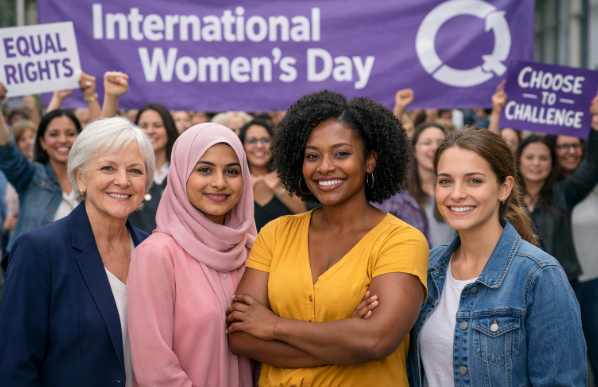
Women have always been catalysts for change. Across history and cultures, they have shaped societies, nurtured communities, led movements, driven innovation, and challenged barriers that once limited their opportunities. Whether in business, science, politics, education, or creative industries, women continue to redefine leadership and resilience.
Their contributions shape economies, influence culture, and inspire the next generation. Yet behind every milestone achieved lies a long history of courage, persistence, and advocacy.
Their strength lies not only in their ability to overcome challenges but also in their capacity to inspire progress. Women have pushed boundaries, broken barriers, and redefined what leadership and resilience look like in modern society.
Despite the progress achieved, the journey toward equality is still ongoing. Many women continue to face systemic barriers, discrimination, and limited opportunities in various parts of the world due to gender inequality.
This is why the global celebration of International Women’s Day remains incredibly important. Observed every year on March 8, the day honors the achievements of women while raising awareness about gender equality and women’s rights.
What Is International Women’s Day?
International Women’s Day is a global observance celebrated annually on March 8 to honor the social, economic, cultural, and political achievements of women.
The day also serves as a call to action for accelerating gender equality worldwide.
Unlike many holidays that focus only on celebration, International Women’s Day combines recognition, reflection, and advocacy. It encourages governments, organizations, and individuals to support initiatives that empower women and girls.
Today, International Women’s Day is marked across the globe with conferences, campaigns, educational events, and social media movements that highlight the importance of women’s empowerment.
The History Behind International Women’s Day
The origins of International Women’s Day date back to the early 20th century, when women began organizing movements to demand better working conditions, voting rights, and fair wages.
One of the key figures associated with the establishment of the day is Clara Zetkin, a German activist who suggested the idea of an international day dedicated to women during the International Socialist Women’s Conference in 1910.
The first official International Women’s Day celebrations were held in 1911 in several European countries, including Austria, Denmark, Germany, and Switzerland.
Over time, the movement gained global recognition. In 1975, the United Nations officially began celebrating International Women’s Day, further establishing it as a worldwide event focused on advancing gender equality.
Today, the day continues to inspire millions of people to reflect on progress made and the work that still lies ahead.
Why International Women’s Day Matters Today
While significant progress has been made in women’s rights, many challenges remain. Around the world, women still face barriers such as wage inequality, limited leadership opportunities, and gender-based discrimination.
International Women’s Day matters because it:
1. Celebrates Women’s Achievements
The day highlights the accomplishments of women in fields such as science, politics, business, arts, and technology.
2. Raises Awareness About Gender Inequality
It draws attention to issues such as unequal pay, limited education opportunities, and gender-based violence.
3. Encourages Collective Action
Governments, organizations, and individuals use the day to promote initiatives that support women’s rights and empowerment.
4. Inspires Future Generations
Young girls and women find inspiration from the stories of trailblazers who have paved the way for progress.
By acknowledging both achievements and challenges, International Women’s Day serves as a reminder that gender equality benefits everyone.
Each year, International Women’s Day is celebrated with a unique theme that focuses on a specific aspect of gender equality. These themes encourage discussions, inspire campaigns, and guide organizations in promoting meaningful change.
The annual theme highlights the need for continued progress while encouraging people across the world to take part in building a more inclusive future.
Inspiring Women Who Changed the World
Throughout history, many women have broken barriers and paved the way for future generations.
Marie Curie
A pioneering scientist and the first woman to win a Nobel Prize, Marie Curie made groundbreaking discoveries in physics and chemistry.
Rosa Parks
Often called the “mother of the civil rights movement,” Rosa Parks became a symbol of resistance after refusing to give up her bus seat during racial segregation in the United States.
Malala Yousafzai
A global advocate for girls’ education, Malala became the youngest Nobel Prize laureate after surviving an attack by extremists who opposed her activism.
Ngozi Okonjo-Iweala
A Nigerian economist and the first woman and first African to serve as Director-General of the World Trade Organization.
These women, among many others, demonstrate how courage and determination can transform societies.
The Role of Women in Today’s World
Women today play essential roles in shaping the global economy and driving innovation.
Across industries, women are leading change in areas such as:
- Technology and artificial intelligence
- Entrepreneurship and business leadership
- Healthcare and scientific research
- Politics and governance
- Education and social development
In many parts of the world, women are also driving grassroots initiatives that improve communities and create opportunities for others.
For example, women entrepreneurs across Africa are building startups, mentoring young professionals, and contributing to economic growth.
The Future of Women’s Empowerment
While remarkable progress has been made, the journey toward gender equality continues.
Future efforts will focus on:
- Closing the gender pay gap
- Increasing women’s representation in leadership
- Improving access to education for girls
- Supporting women in science, technology, engineering, and mathematics (STEM)
As societies evolve, empowering women will remain essential for sustainable development and global progress.
Conclusion: Celebrating Women and Continuing the Journey
International Women’s Day is more than a celebration; it is a reminder of the strength, resilience, and achievements of women across the world.
It is also a call to action to ensure that every woman and girl has the opportunity to thrive without limitations.
By celebrating women’s accomplishments, supporting equality, and empowering the next generation, we move closer to a world where talent, ambition, and leadership are defined not by gender but by ability and determination.
Every step taken toward equality benefits not only women but society as a whole.
And that is why International Women’s Day remains one of the most meaningful global celebrations of progress, courage, and hope.


Leave a reply


 Fun times ahead … #lebronjames #lakers #lebron #lustremagazine00:19
- Oscar-winning #MichaelBJordan Congratulations!! #Sinners for winning Best Actor at the 2026 #Oscars00:56
- #Zendaya publicly shared “recovery plan” and its brilliantly low-effort #lustremagazine00:16
- #NickJonas is smooth 😍 #PriyankaChopra #couple00:10
- #AnnaWintour and #MirandaPriestly at the 2026 #Oscars00:14
- #tchalamet and @kyliejenner make their way into the #VFOscars party. Video by wengellg00:06
- #Oscar winner and #Sinners star #MichaelBJordan00:38
- #ElsaPataky #ChrisHemsworth #Oscars #celebritycouple #Oscars202600:08
- #tyla attends the #maisonvalentino AW26 show in Rome #DazedFashionTV #Valentino00:12
- Garmmy 2026 #justinbieber #hailybieber #grammy #lilbieber #lustremagazine00:29
- #zendaya understood the assignment. #tomholland #viral #trend #celebrity00:11
- #LeonardoDiCaprio has graced the #BAFTAs with a rare red-carpet appearance, wearing a #dior00:21
- #annehathaway at the #Balenciaga fashion show 2026 #ParisFashion Week on #thedevilwearsprada00:14
- #Ponytail is back! #ArianaGrande looks gorgeous at the 2026 🎥: ginainterrupted #GoldenGlobes.00:20
- #SHAQ forgot that he bought two Escalades 😅01:14
- #therock and #KevinHart doing the #TortillaChallenge is the funniest thing we’ve seen all week!01:00
- #Oscar Throwbacks, #EmmaStone accepting her second Academy Award (in a broken dress!)01:41
- #Bridgerton cast and crew singing ‘Happy Birthday’ for #Yerin #bridgertonseason400:16
- Inside #queencharlotte wig #bridgerton #bridgertonseason400:08
- #zendaya at the #louisvuitton AW26 #lustremagazine00:17
- #shaq on set for #gravesendseries #shaq #brooklyn #onset #basketball #gangster #epic00:13
- #zendaya dazzling in white at #louisvuitton’s fall/winter #ParisFashionWeek show #lustremagazine00:17
- #shaq #queenlatifah at a NBA playoffs game #shaquilleoneal #nbaplayoffs00:16
- #johnlithgow #albusdumbledore #harrypotter #celebrity00:12
- #sbiff awardees #jacobelordi #wagnermoura #teyanataylor #wunmimosaku #ingalilleaas #sydneysweeney00:07